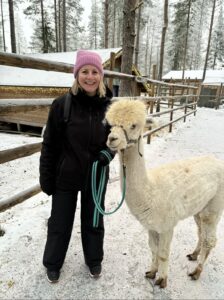
 Hi, I’m Liz.
For most of my life, I’ve felt different.
At school, friends would call me scatty and gullible. And teachers described me as easily distracted, too talkative and “not reaching my potential.” I’d often freeze if asked a question in class, terrified of getting it wrong and attracting attention.
I got decent GCSEs with little effort, then flunked my A
levels because I couldn’t concentrate or keep up with the work. Underneath it all, I carried a deep sense of shame. I just thought I wasn’t good enough.
Eventually, I found my place in marketing. I loved the variety, the creativity and the pace. But as I climbed the ladder, I still felt like I didn’t belong. Spinning all the plates – home, work, life – often left me exhausted. Deadlines became adrenaline-fuelled races against distraction. Meetings sometimes felt like marathons. And no matter how much I achieved, I often felt I was still falling short.
The turning point came with my eldest son. He was struggling, and as I researched ADHD to better support and advocate for him, I started recognising myself. Ironically, I was diagnosed before him at 40, after years of masking, self-doubt and pushing through.
Getting diagnosed later in life can bring clarity and relief, but it also shakes up all the coping mechanisms you’ve built. In the middle of processing mine, I burnt out so badly that I was signed off work for a few months. My people-pleasing and plate-spinning had finally caught up with me.
That was my wake-up call.
I started by asking for help – something I’d always found hard to do. I took anti-anxiety medication, had CBT (thank you, NHS) and invested in ADHD coaching because I knew I had to break the patterns that had got me there.
I spent months reflecting, reframing and rebuilding with new tools, insights and strategies that worked with me brain.
But in the workplace, things became complicated. I didn’t yet know what I needed, let alone how to ask for it. And while my employer meant well, they simply didn’t know how best to support me. Assumptions and misunderstandings crept in, and conversations became messy and emotional. And it showed me just how big the gap is between what neurodivergent professionals need and what most workplaces understand.
At the same time, I realised something important: what gave me the most fulfilment in my career wasn’t the marketing itself. It was the coaching, mentoring and supporting of people – helping them find their voice, their confidence, their own brilliance.
I’d trained in coaching a decade earlier and had been supporting colleagues for years, but now I could see it clearly: this was the work that lit me up.
That’s why I created The Good Space.
✨ A space where neurodivergent professionals can stop making themselves small and step into their strengths.
✨ A space where organisations can move beyond “tick-box inclusion” to create cultures where all kinds of minds can thrive.
And for the younger me who thought she had to hide to succeed.
Because difference isn’t a deficit. It’s brilliance. And life’s too short to be anything but yourself 💛.