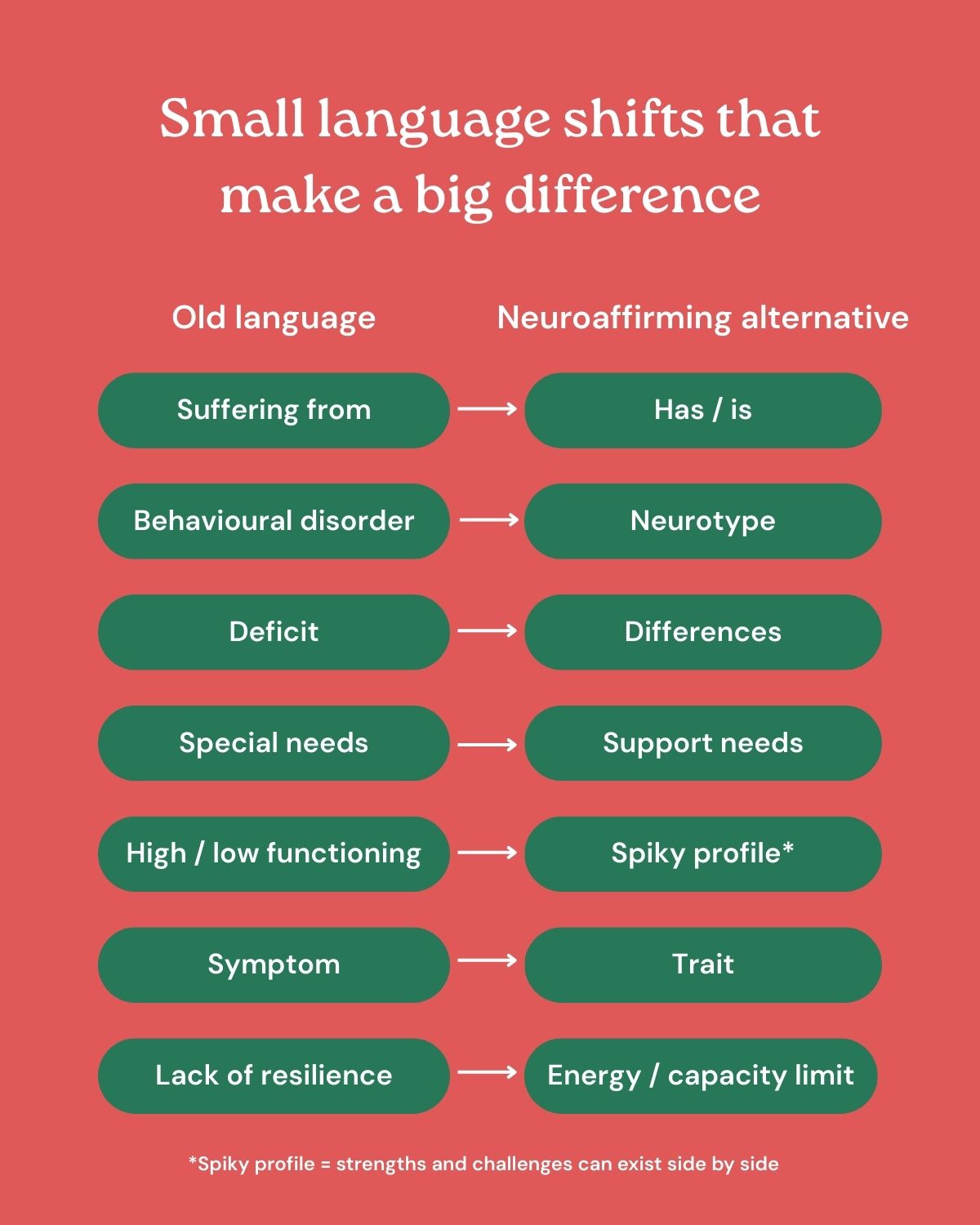
Small language shifts that make a big difference.
Words matter.
When I first started navigating my son’s ADHD journey five years ago – and my own three years ago – I realised just how much language shapes how people see you… and how you see yourself.
In the beginning, it’s easy to get pulled into medicalised, deficit-based terminology.
Words like disorder, deficit, symptom, high/low functioning.
But over time, I came to understand the power of neuroaffirming, strengths-based language for me, for my son, and for the brilliant ADHDers I coach.
It’s not about being “PC.”
It’s about acknowledging difference without judgement.
The language we use can:
- build stigma or reduce it
- undermine confidence or strengthen it
- reinforce exclusion or create belonging
And just as importantly, I’ve learned how deeply personal language can be.
What feels empowering for one person may feel uncomfortable for another.
So instead of assuming, we can choose curiosity:
Ask. Listen. And let people lead with their own words.
Below is a visual that highlights some small neuroaffirming language shifts that can make a big difference in workplaces, conversations and everyday life.